
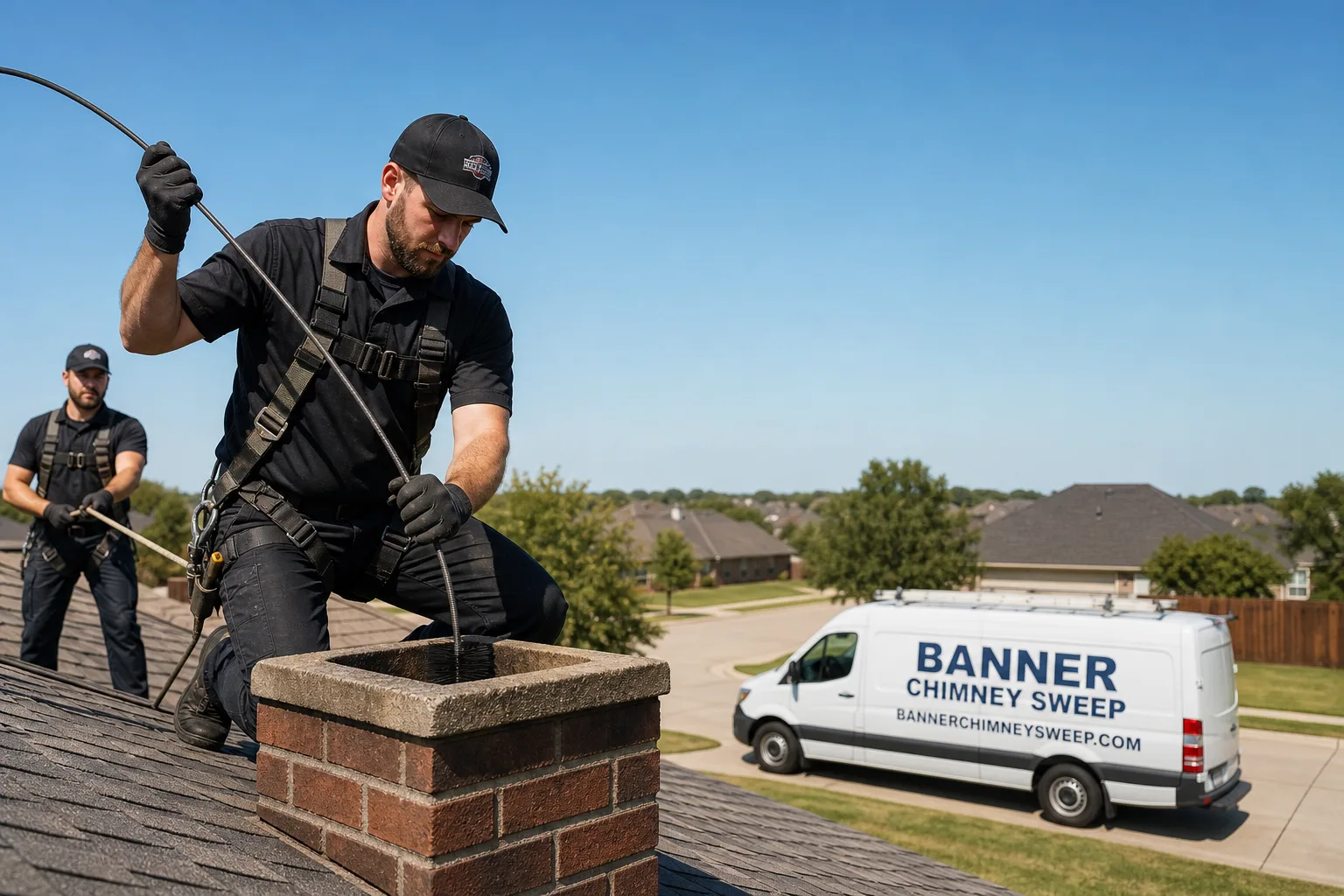
 Sweep & inspection
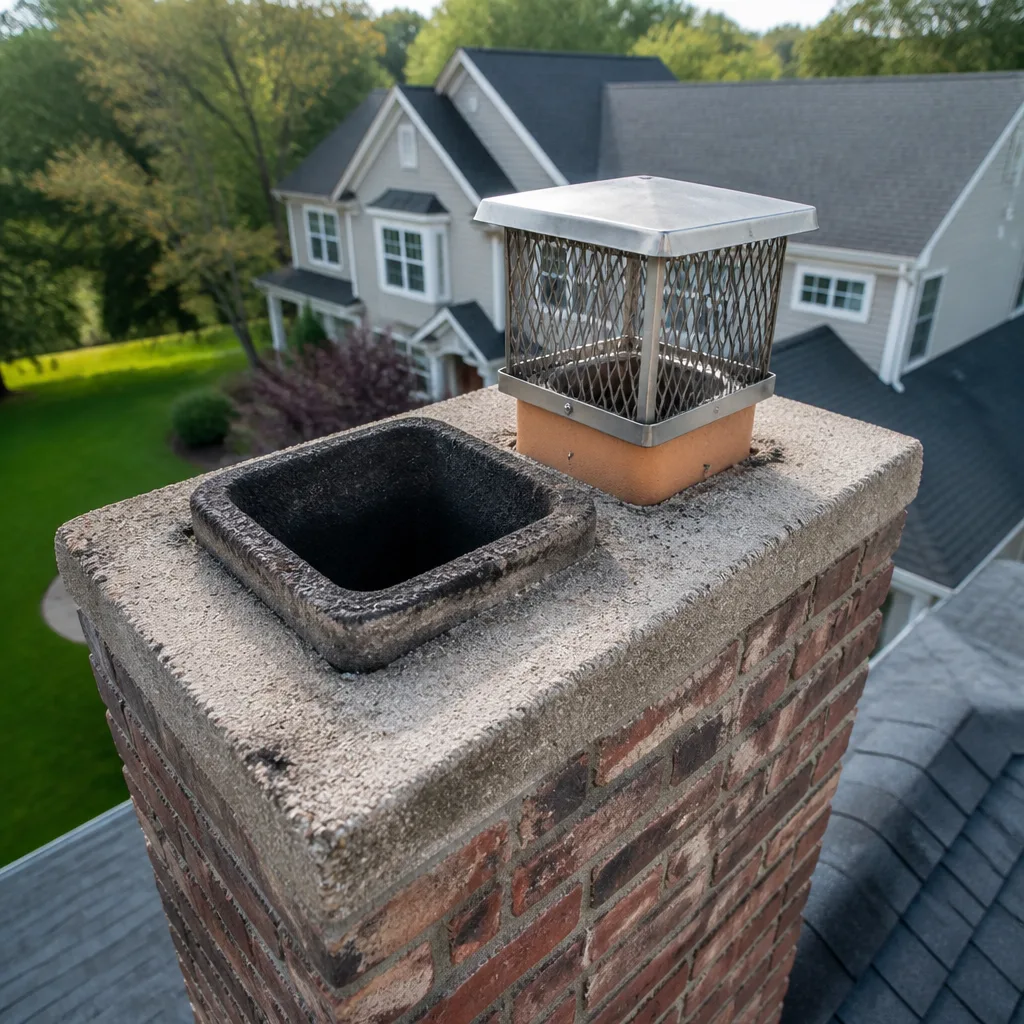
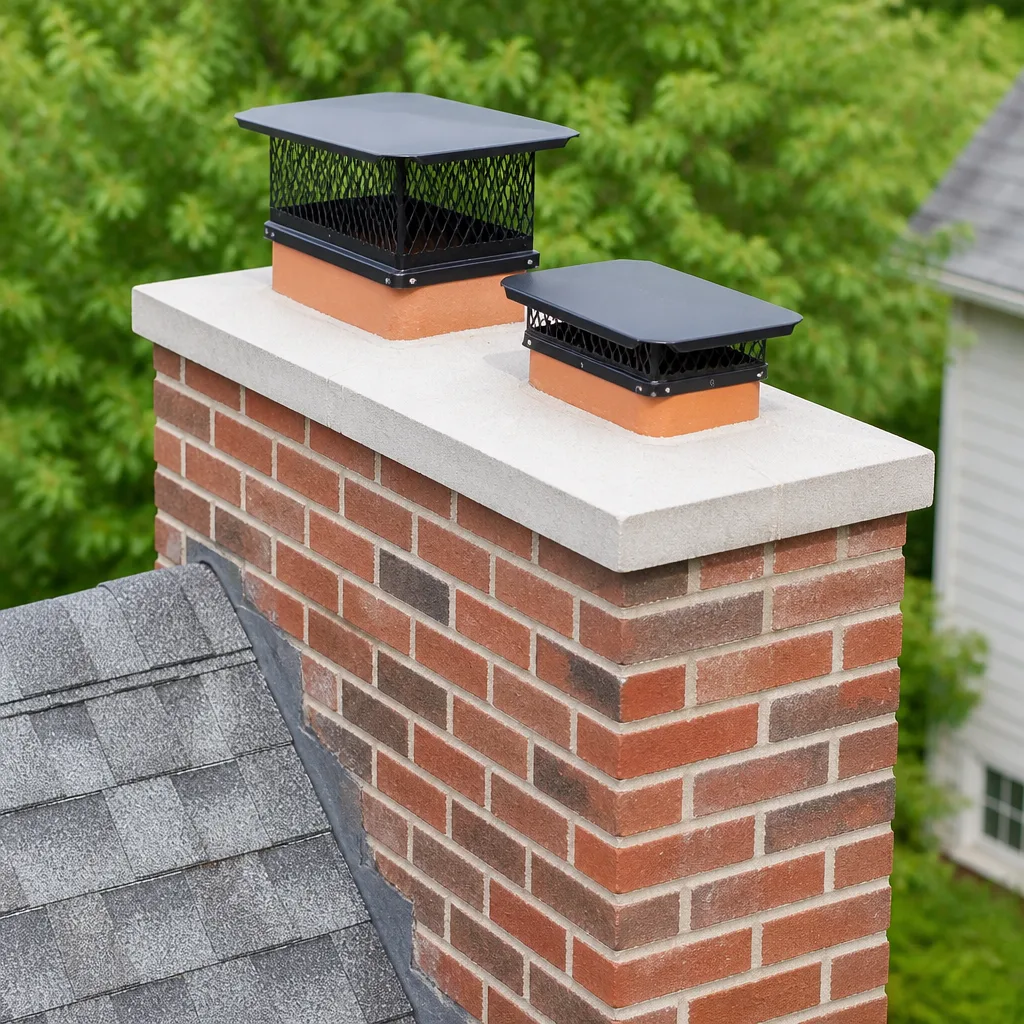 Caps & crowns
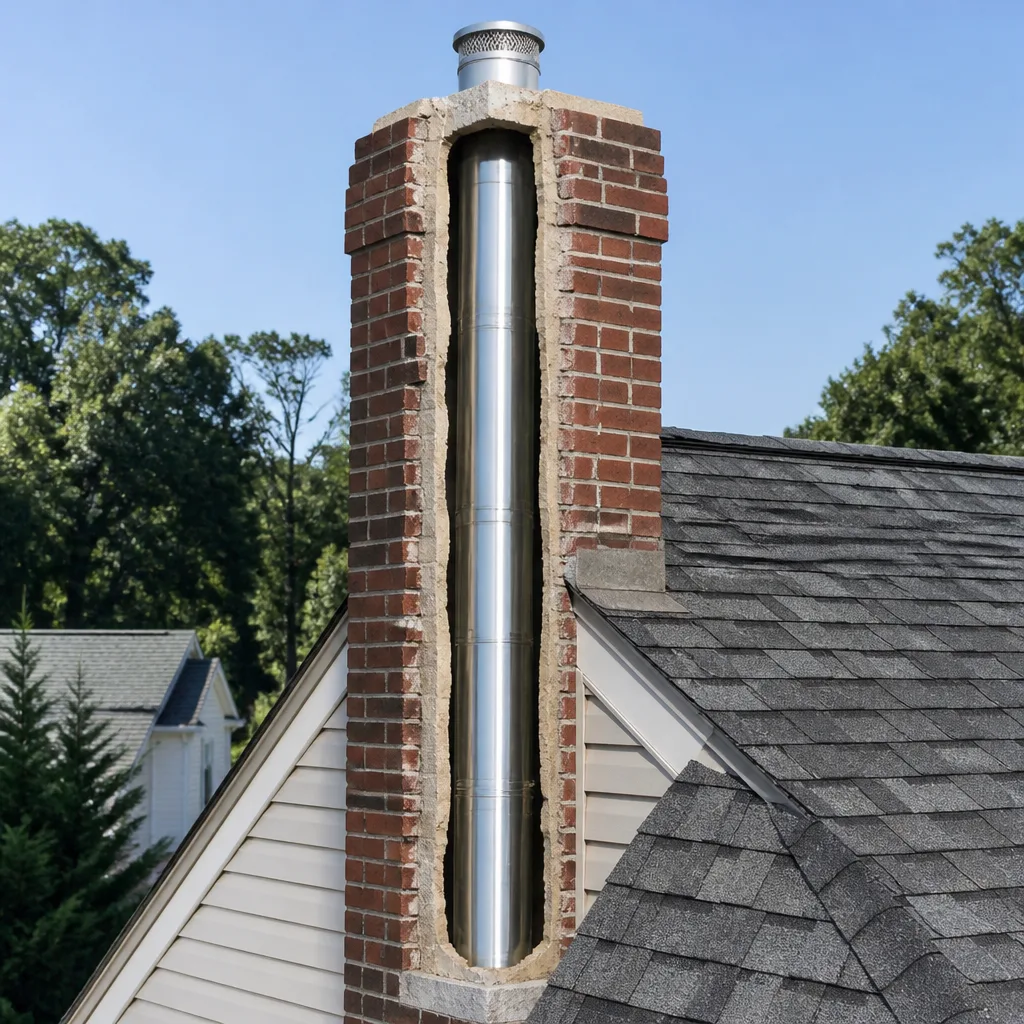 Flue relining
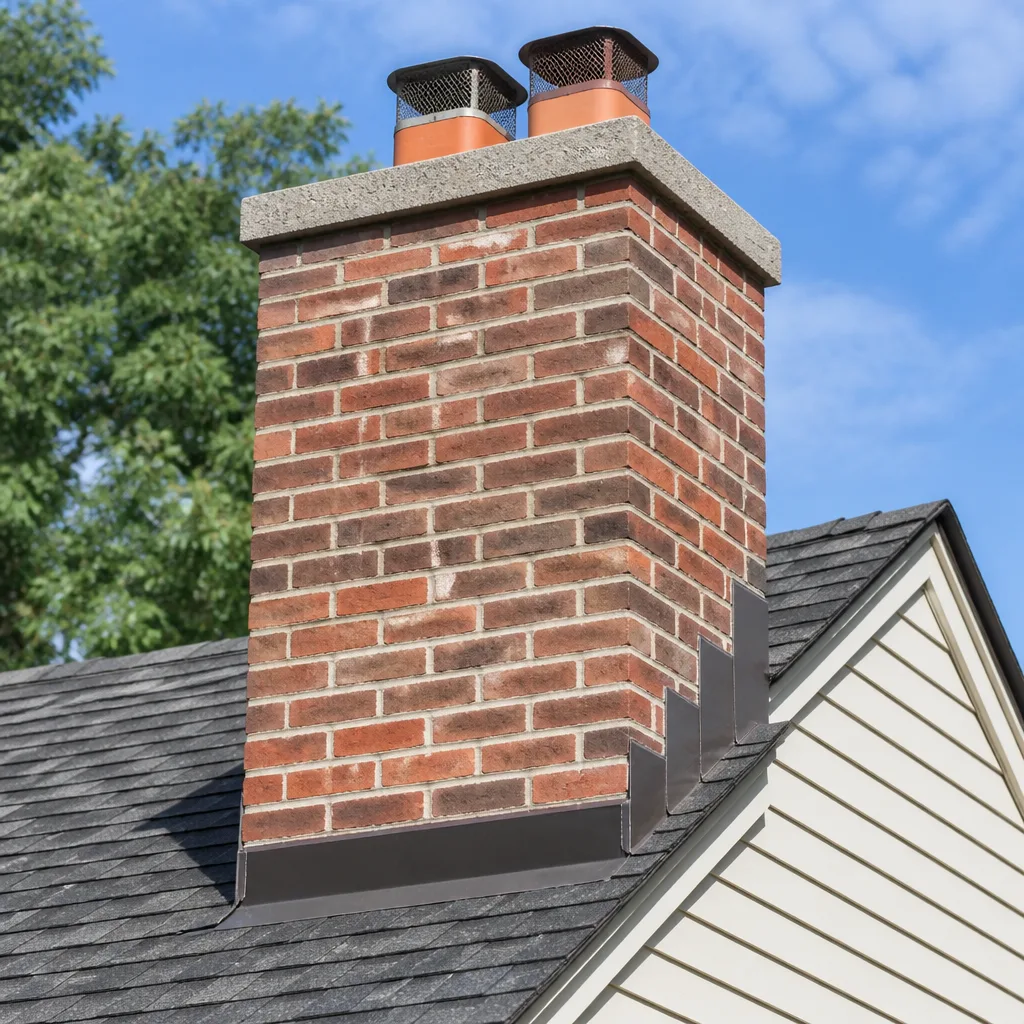 Masonry repair
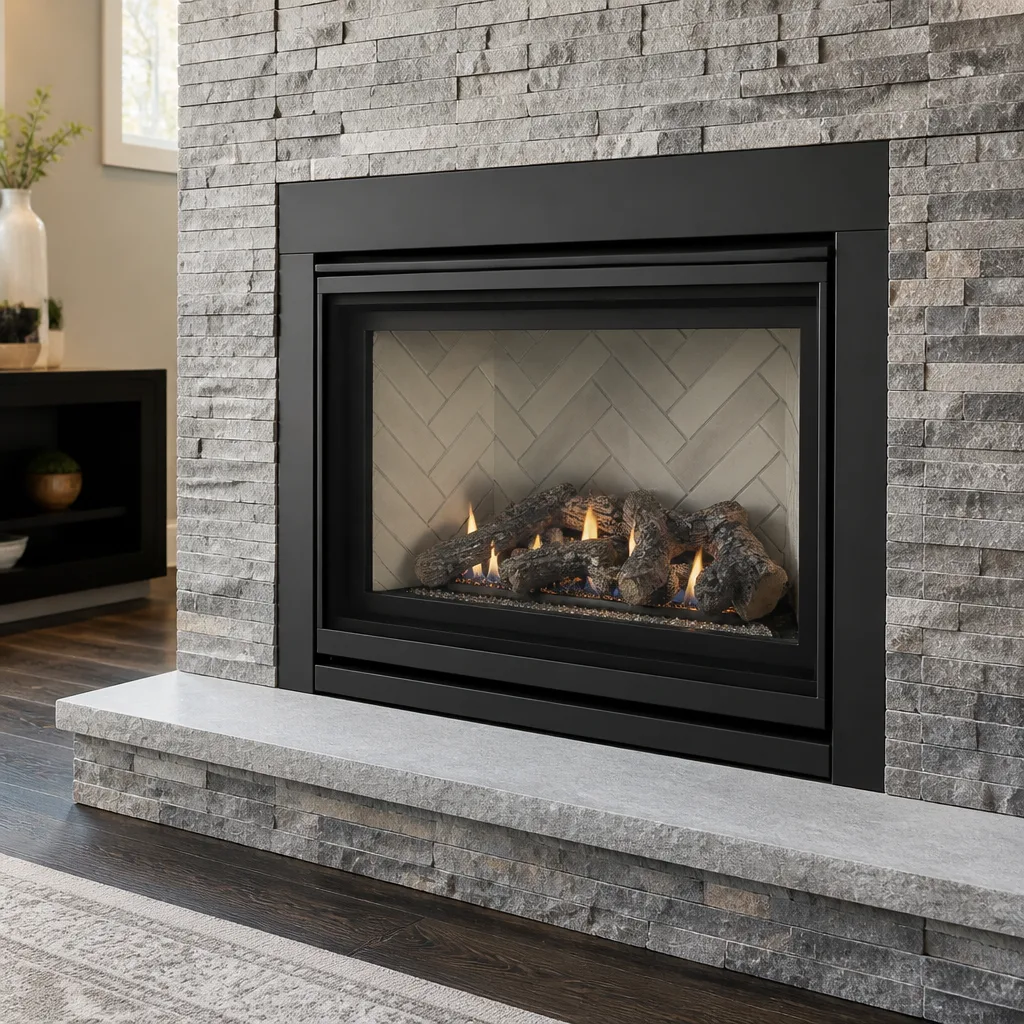 Gas fireplace service
Level 1 sweep and inspection to the NFPA 211 annual standard - flue, crown, cap, and flashing checked and photographed
Chimney sweep logs do not sweep chimneys. They loosen some creosote - which then falls where a brush and vacuum still have to collect it.
Trusted Chimney Inspection for Grand Prairie Homeowners
Most chimney problems in Grand Prairie announce themselves quietly – a faint smell on a warm day, a little water stain on the ceiling near the flue, a draft that wasn’t there last winter. By the time you notice smoke rolling back into the room, the issue underneath has usually been working away for a while. An inspection finds it early, while it’s still a repair instead of a rebuild.
Our technicians have up to experience and work on chimneys only, so they know what a wood-burning flue, a gas insert, or an older masonry stack looks like when it’s sound and when it isn’t. We inspect first and recommend second – nothing gets suggested without photo or camera evidence you can see for yourself. Same-day inspections are often possible when you call early, and the estimate is always free.
Call (833) 633-6933. We answer 24/7. Fast dispatch from 7am to 7pm, Sunday through Friday.
If you’d like the bigger picture of what we do, start with Banner Chimney Sweep and see how inspection, sweeping, and repair fit together under one company.
Fireplace Inspection
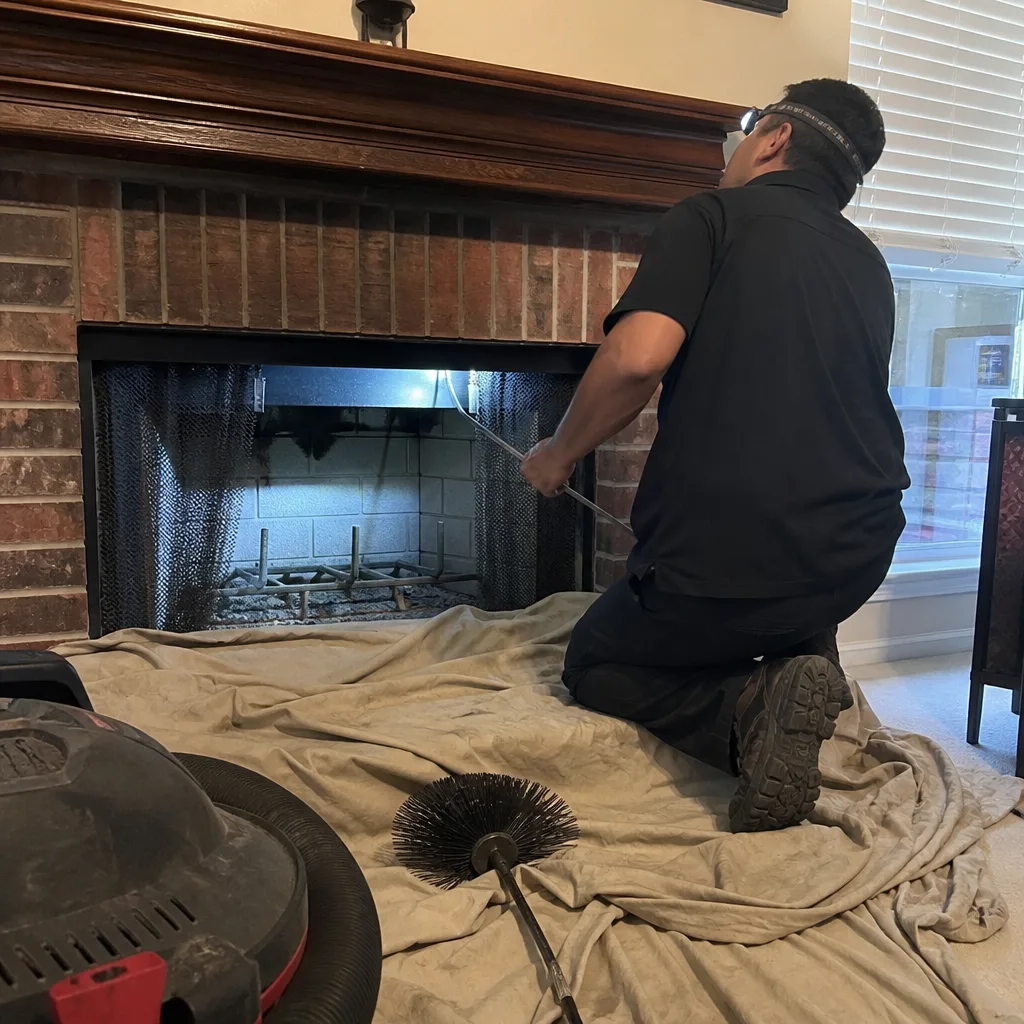
A Fireplace Inspection is a close look at the firebox, damper, smoke chamber, and the visible parts of the flue serving your fireplace – the parts you use every time you light a fire. You need one before the first burn of the season, after any chimney fire, whenever you move into a home with a fireplace you haven’t used, or if smoke, odor, or draft has changed. We check the firebox for cracked brick and loose mortar, test the damper for smooth operation, and confirm the smoke chamber isn’t coated with glazed creosote. An inspection of this kind typically runs $150 to $300 depending on how much of the system needs to be opened up, and the written estimate sets the final price. We use Gelco and Copperfield components where replacement parts are needed, so what goes back in matches the system you already have.
What We Look At Inside the Firebox
Cracked firebrick, eroded mortar joints, and a warped or rusted grate all change how heat moves through the firebox. Left alone, a crack becomes a path for heat and embers to reach the structure behind the brick. We document what we find and show you the difference between cosmetic wear and something that needs attention now.
Damper and Smoke Chamber Checks
A damper that won’t seal lets heated air escape the house all year and cold air drop down the flue in winter. We test the damper plate, the pivot, and the frame, then look at the smoke chamber above for rough parging that catches creosote. If the chamber needs smoothing, HeatShield resurfacing is one option we’ll walk you through.
Styles & brands we work with
- Sweep & inspection
- Caps & crowns
- Flue relining
- Masonry repair
- Gas fireplace service
Chimney Inspection Services
Chimney Inspection Services cover the whole chimney system – not just the firebox, but the flue, the crown, the cap, the flashing, and the masonry visible from the roof and the ground. You need this level of inspection annually if you burn wood, after a storm, when you’re buying or selling a home in Grand Prairie, or any time you’ve seen water where it shouldn’t be. We work from a checklist built around NFPA 211 inspection standards, so nothing gets skipped. Pricing for a standard annual inspection typically falls between $150 and $350 depending on access and the number of flues, and the written estimate sets the final price. Because we also sweep and repair, one company handles every stage of chimney care without you coordinating separate contractors.
Annual and Pre-Season Inspections
An annual look catches small deterioration before it turns into a rebuild. We recommend scheduling before burning season, while the weather is still mild and the schedule is open. A pre-season inspection also confirms your cap and screen are intact, which keeps birds and debris out of the flue all winter.
Real Estate and Post-Storm Inspections
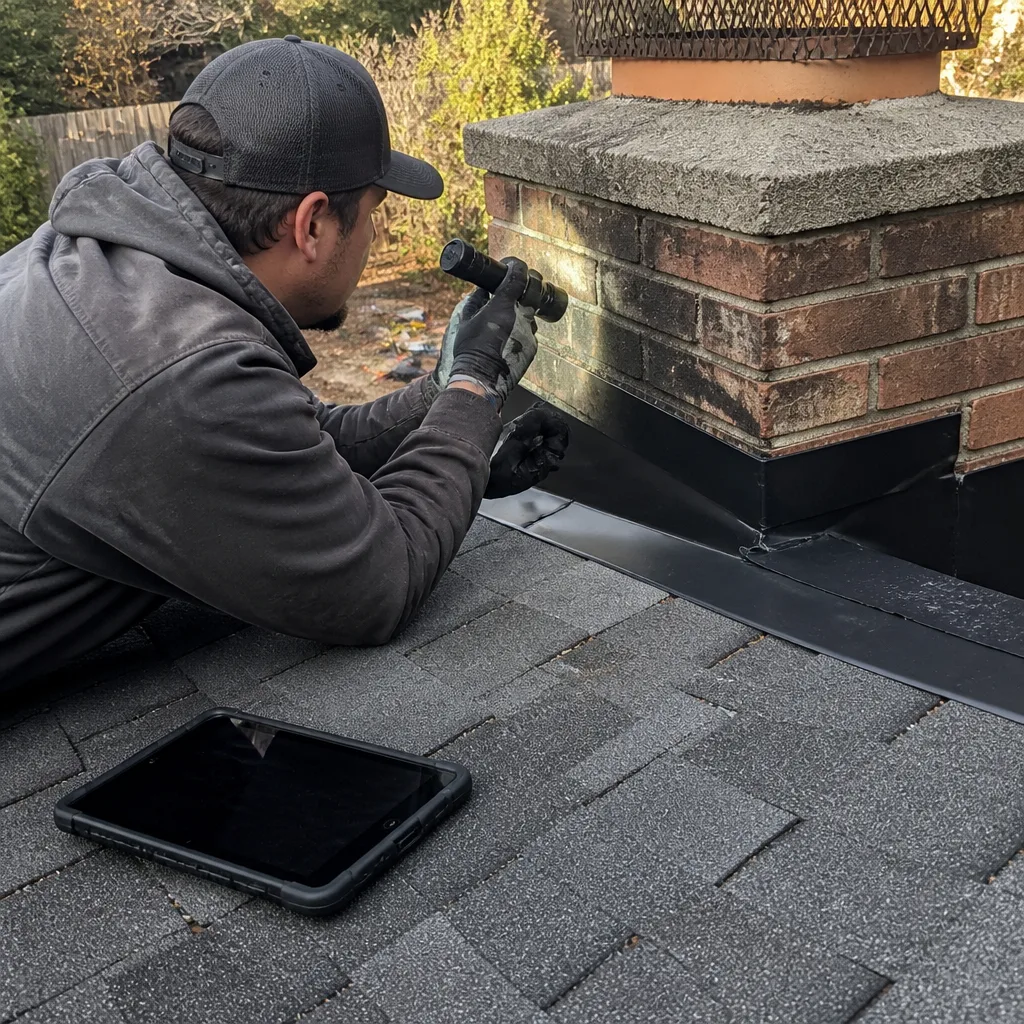
Buying or selling a home with a fireplace? A documented inspection gives both sides a clear picture of the chimney’s condition. After a strong storm, we check for displaced caps, cracked crowns, and damaged flashing – the three places wind and rain do the most damage to a Grand Prairie roof.
Chimney Flue Inspection
A Chimney Flue Inspection focuses on the inside surface of the flue – the liner, the joints, and the path smoke and gases actually travel. You need one whenever there’s a change in how the fireplace draws, after a chimney fire, and as part of any annual service, especially on an older masonry chimney that may have a clay tile liner with gaps. We run a camera down the flue, check for cracked tiles, missing mortar joints, and heavy creosote glaze, and confirm the liner is continuous from the firebox to the top. A flue-focused inspection typically runs $175 to $350 depending on flue length and how much camera work is required, and the written estimate sets the final price. If the liner needs replacing, we install DuraFlex liner systems sized to your appliance.
Clay Tile and Liner Condition
Clay tile liners crack with heat cycling and settle over time, and a single displaced tile opens a path for heat to reach framing. We check every joint we can see and use camera footage to document what’s between the tiles. When gaps are significant, relining is usually the honest recommendation rather than a patch.
Creosote and Draft Checks
Glazed creosote – the shiny, hard stage – is the kind that doesn’t brush off with a standard sweep and is the fuel behind most chimney fires. We measure how much has built up and how far up the flue it goes. Draft is tested at the same time, so you know whether the flue is sized correctly for your fireplace.
Chimney Fire
A Chimney Fire is a fire that burns inside the flue itself, feeding on creosote deposits, and it can happen without anyone noticing until damage is done. You need a professional inspection after any suspected chimney fire, even a small one, because the heat can crack tiles, warp a damper, and scorch the mortar in ways that aren’t visible from the hearth. You also want an inspection if you’ve had a chimney fire in the past and never had it checked – the damage may still be there. We inspect the full flue with a camera, check for cracked tiles and warped metal, and document the condition so you know whether the system is safe to use. Post-fire inspection typically runs $200 to $400 depending on how much of the system needs to be evaluated, and the written estimate sets the final price. Our inspection-first approach means you see the photos before anything is recommended.
Signs a Chimney Fire Happened
Loud popping or roaring from the flue, a sudden rush of heat, or puffs of black smoke from the top are common signs. Sometimes the only clue is a warped damper or a section of discolored cap. Any of these means the chimney should be inspected before the next fire.
Why Creosote Buildup Matters
Creosote accumulates every time you burn wood, and it thickens faster with slow, smoldering fires and unseasoned wood. Once it reaches the glazed stage, brushing alone won’t remove it safely. Regular sweeping keeps the layer thin enough that a chimney fire has little to feed on.
Level 2 Chimney Inspection
A Level 2 Chimney Inspection is the next step up from the basic annual visit – it includes everything in a standard inspection plus a full video scan of every accessible flue and the attic and crawl space areas around the chimney where accessible. You need a Level 2 whenever a property changes hands, after an earthquake, after a chimney fire, when you switch fuel types or appliance, or when a standard inspection turns up something that needs a closer look. We run a camera through the flue, document every joint and transition, and photograph the visible exterior and interior condition. Level 2 inspection typically runs $250 to $450 depending on the number of flues and access, and the written estimate sets the final price. The inspection is designed to meet or inform compliance with NFPA 211 chimney inspection standards.
When a Level 2 Is Required
Real estate transactions, appliance changes, and post-fire evaluations are the three most common reasons. If you’re buying a home in Grand Prairie with a wood-burning fireplace, a Level 2 gives you a documented record of the chimney’s condition. It’s also the right choice when you suspect hidden damage you can’t see from the hearth.
What the Video Scan Shows
The camera captures the inside of the flue from top to bottom, including offsets and transitions where damage is easy to miss. We show you the footage during the visit, not weeks later. That way you understand exactly what we found and why any recommendation makes sense.
Chimney Leak
A Chimney Leak is water getting into the chimney system and, often, into the house around it – showing up as ceiling stains, damp masonry, crumbling mortar, or a musty smell in the room with the fireplace. You need a leak inspection after heavy rain, when you notice a stain near the chimney, or when masonry on the exterior is soft or spalling. Grand Prairie gets intense spring and summer storms, and the chimney is one of the first places a roof takes on water. We check the crown, the flashing where the chimney meets the roof, the cap, and the masonry joints, then trace the source before recommending any repair. Leak inspection typically runs $175 to $350 depending on how far the diagnosis has to reach, and the written estimate sets the final price. We use HeatShield for flue resurfacing and proper masonry repair where the leak is structural.
Where Chimney Leaks Start
The crown is the most common source – a hairline crack in the concrete top lets water in behind the flue. Flashing failure around the roof line is next, followed by failed mortar joints and a missing or rusted cap. We check each in order, top to bottom, because that’s how water travels.
Signs Water Is Getting In
Rust on the damper or firebox, white staining on the brick, a chimney that smells musty even when it’s dry, or efflorescence on the exterior are all telling. If you see any of them after a rain, an inspection is worth scheduling before the next storm.
Chimney Camera Inspection
A Chimney Camera Inspection uses a specialized video camera run down the flue to see the parts of the chimney that can’t be reached by eye – offsets, transitions, the top of the smoke chamber, and the full length of the liner. You need one whenever the visible inspection turns up something unclear, when you’re buying a home, after a chimney fire, or when a draft problem can’t be explained from the firebox alone. We record the scan and review it with you during the visit, so you see exactly what we see. Camera inspection typically runs $175 to $350 depending on flue length and how many scans are needed, and the written estimate sets the final price. Nothing gets recommended without camera evidence you can look at yourself.
What the Camera Reveals
Hairline cracks in tiles, gaps at joints, heavy creosote glaze high in the flue, and even bird nests or debris lodged at an offset all show up clearly on camera. It’s also how we confirm the liner is continuous the full length. Without a camera, those problems stay hidden.
Why We Lead With the Camera
Homeowners worry about being told they need thousands of dollars of liner work they can’t verify. The camera takes that worry off the table – if the footage shows a problem, we show it to you before recommending anything. If it doesn’t, we say so plainly, even when that means the visit ends with no repairs needed.
Brands We Service
We install and service components from Gelco and Olympia Chimney, and we know where each is most likely to need attention. Gelco caps and components are common on residential chimneys, and the gaskets, seals, and mounting hardware are where we see the most wear over time. Olympia Chimney liners turn up on many homes with upgraded venting, and we check the joints and terminations closely because small failures there affect draft.
We also work with Famco and Copperfield products for dampers, caps, and accessory components, and we know which parts of each tend to fail first. Whether you have Gelco, Olympia Chimney, Famco, Copperfield, or any other make, we can help – and we won’t tell you a component needs replacing unless the camera or the visible inspection shows it.
See the difference
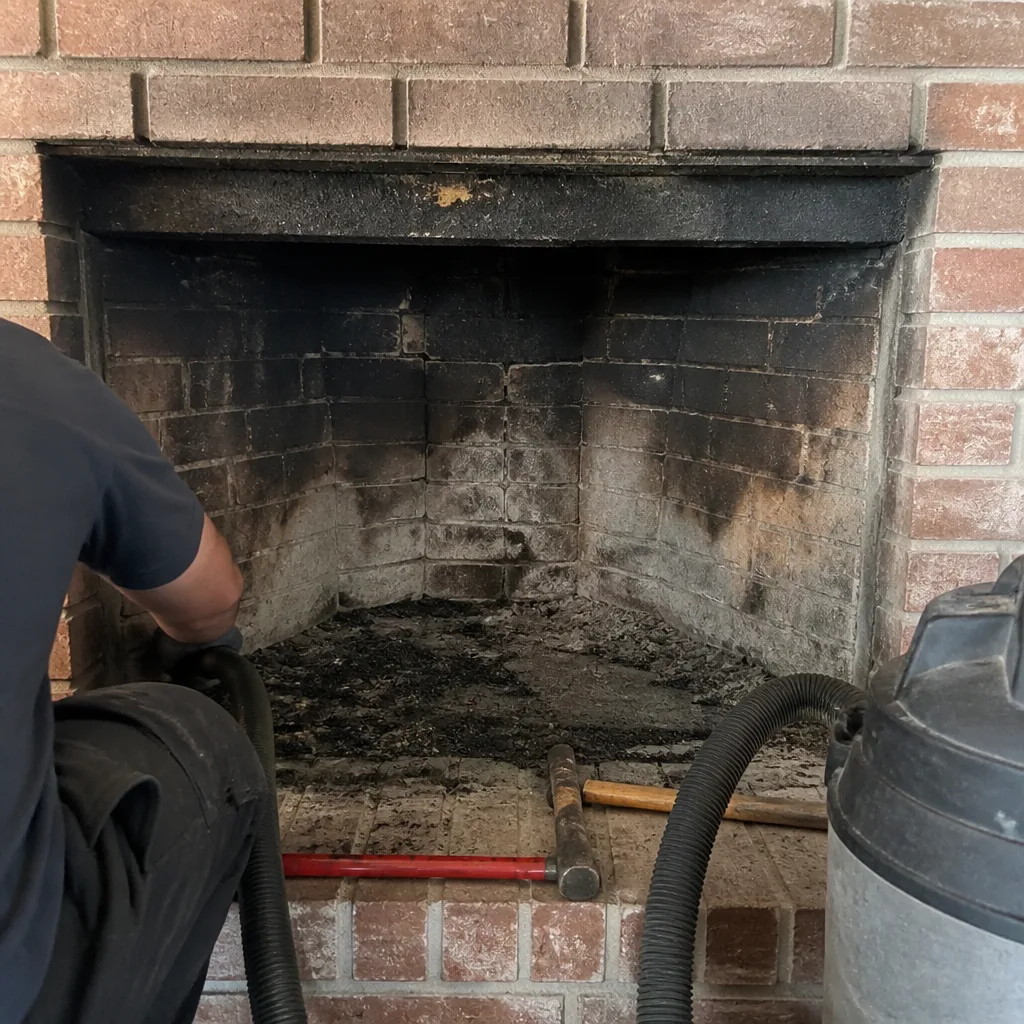 Before
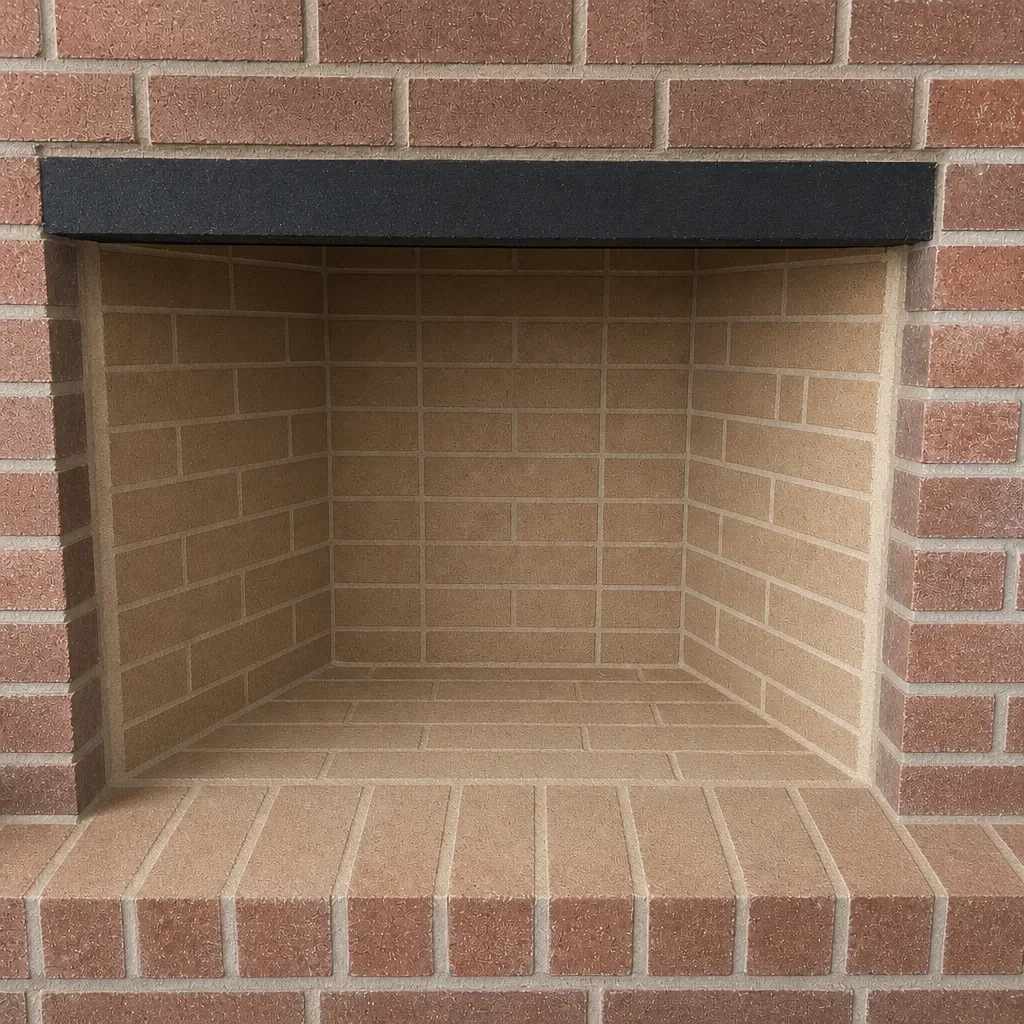 After
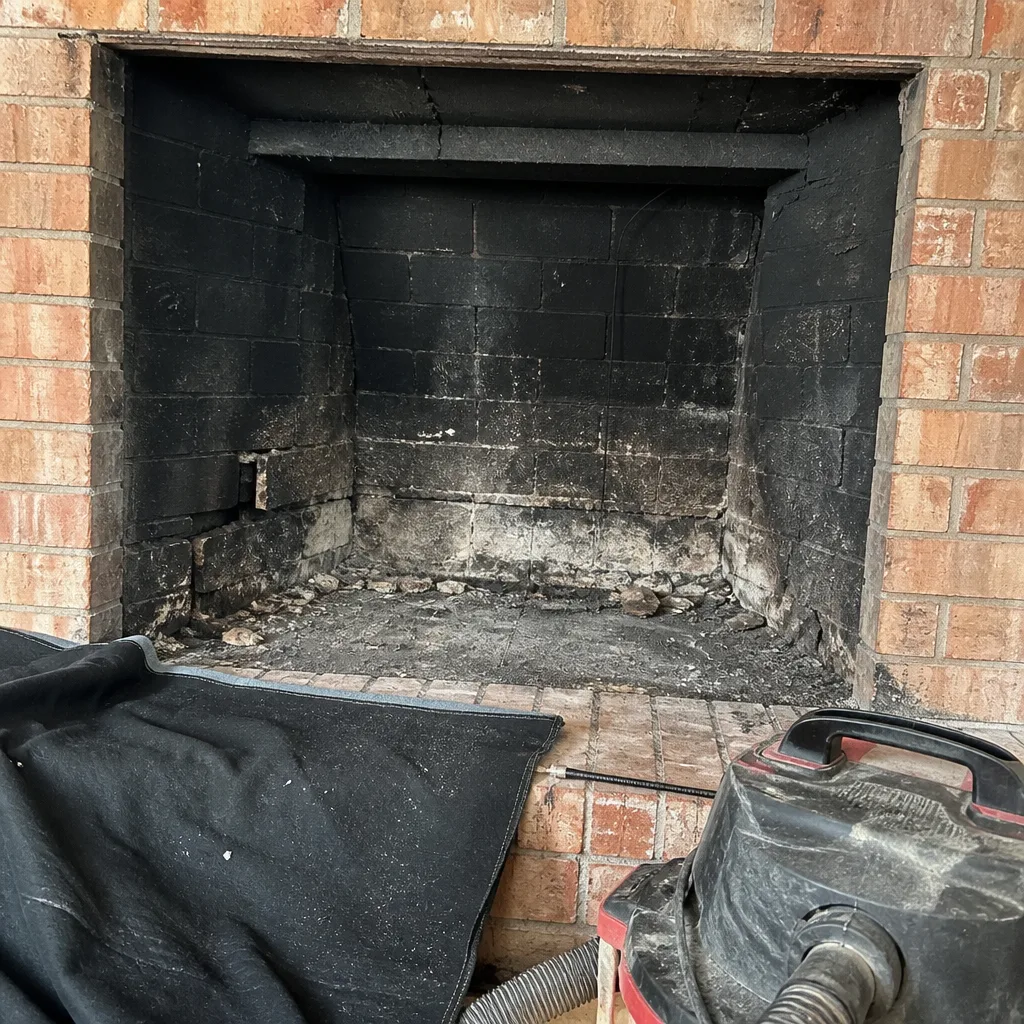 Before
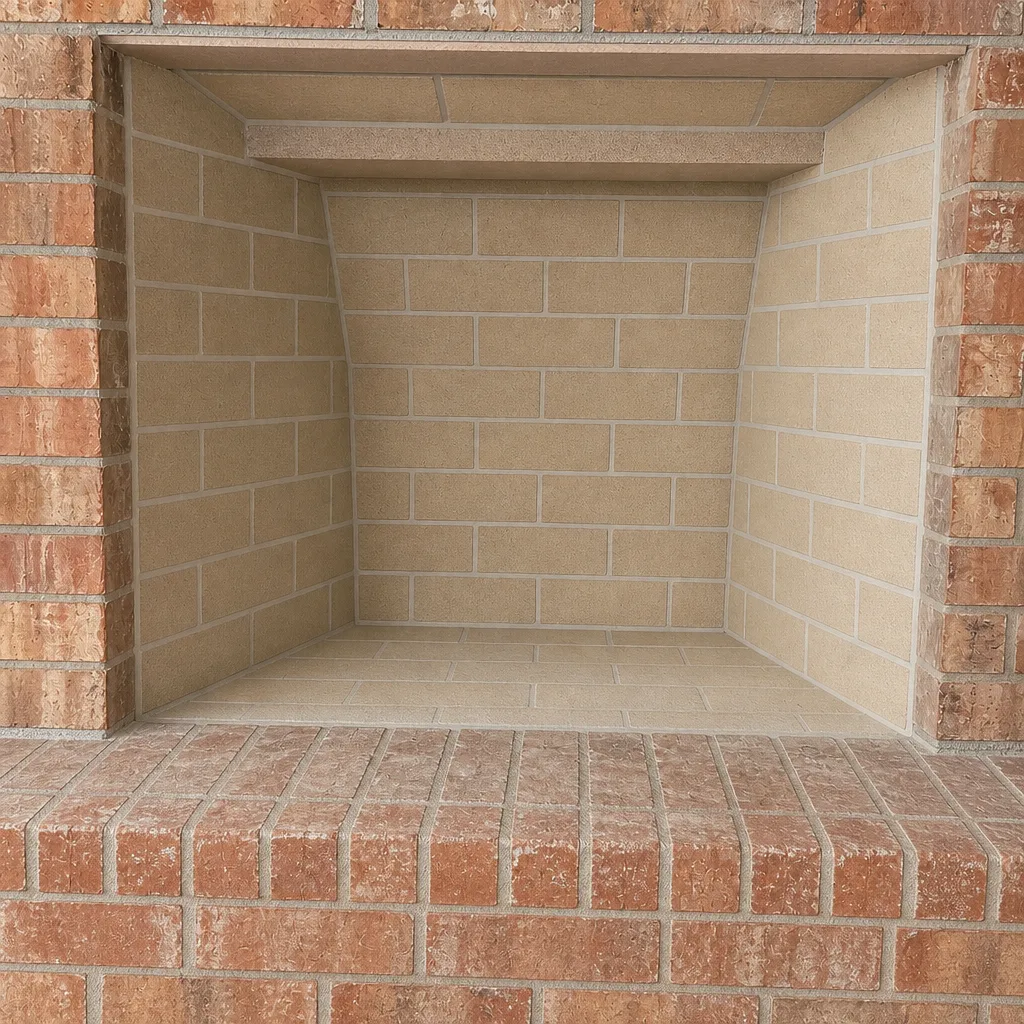 After
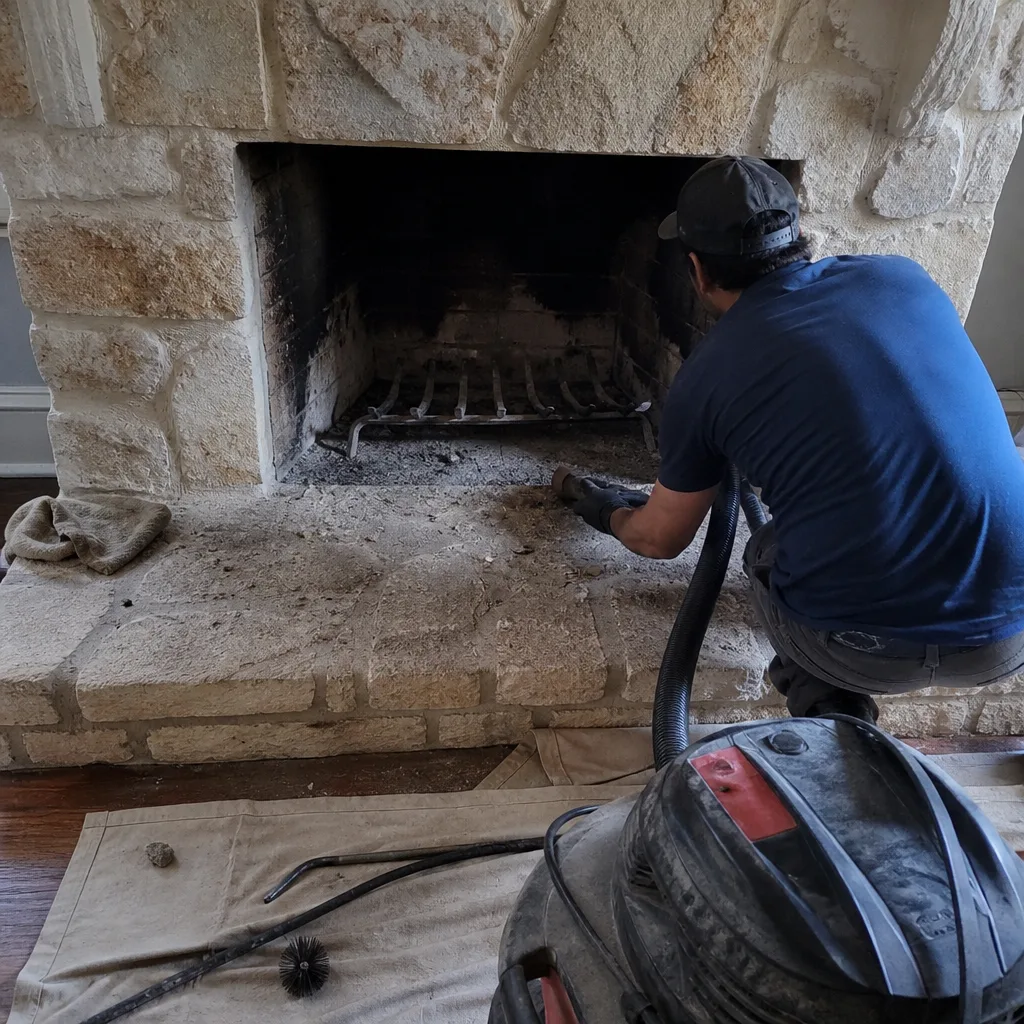 Before
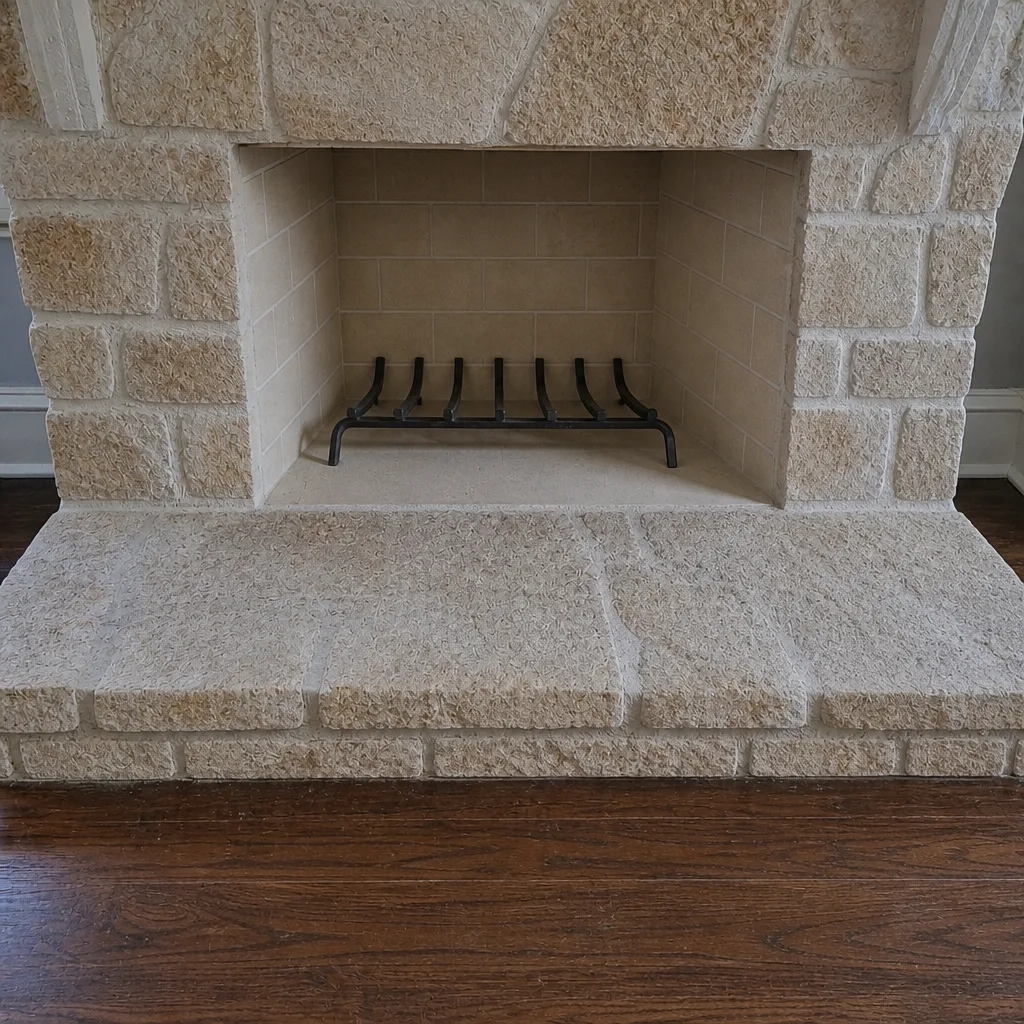 After
Signs You Need a Pro Right Now
- Smoke rolling back into the room. A fireplace that used to draw well and now doesn’t usually means an obstruction or a draft problem in the flue. That’s a sign to stop burning and have the chimney inspected before the next fire.
- Water stains near the chimney. Brown rings on the ceiling or wall near the flue mean water is finding a path in. Left alone, that water rots framing and softens masonry, so it’s worth diagnosing sooner rather than later.
- A strong smell when the fireplace is cold. That odor is often creosote or a draft problem pulling air back down the flue. It’s also how many homeowners notice a cracked flue or a missing cap.
- Visible cracks in the firebox brick or mortar. Cracks let heat reach the structure behind the brick. That’s a genuine hazard, so stop using the fireplace and get an inspection before anything else.
- You can’t remember the last inspection. A chimney that hasn’t been checked in years may have creosote buildup, a damaged crown, or a compromised liner. An inspection tells you where things stand.
Our Process, Step by Step
- 1
Call and book the visit. Tell us what you’ve noticed – smoke, odor, water, or just a routine check – and we’ll set a time. Same-day is often possible when you call early in the day. We answer 24/7, with fast dispatch from 7am to 7pm, Sunday through Friday.
- 2
Arrive and set up clean. We lay drop cloths, protect the hearth, and confirm with you which chimney is being inspected before anything opens up. If there’s more than one flue, we confirm the one you actually use.
- 3
Visual inspection, top and bottom. We check the firebox, damper, smoke chamber, flue, crown, cap, and flashing. While the flue is open, we also run a camera scan to reach the parts eye can’t.
- 4
Review the findings with you. We show you the photos and camera footage during the visit and explain what’s sound, what needs watching, and what needs work now. No pressure and no surprise line items.
- 5
Written estimate and next steps. If repair is needed, you get a written estimate that sets the final price. If work can safely wait, we say so. If you’d like the repair too, we schedule it in the same visit when possible – one company, every stage of chimney care.
How Much Does Chimney Inspection Cost in Grand Prairie?
A standard chimney inspection in Grand Prairie typically runs $150 to $350 depending on access and how many flues are involved. A level 2 inspection, which includes the camera scan and the attic and crawl space areas, typically runs $250 to $450. Leak diagnosis and post-fire evaluations typically run $175 to $400 depending on how far the diagnosis reaches. Repair work, if needed, is priced separately – liner replacement, crown repair, and resurfacing each carry their own estimate.
What moves the price: the number of flues, how easy the roof is to access, whether a camera scan is needed, and how much diagnostic work the visit requires. Simple annual checks fall at the low end, while multi-flue masonry chimneys and properties with unknowns land at the high end.
How to avoid overpaying: get a written estimate before any work starts, ask for camera footage when a liner or flue repair is recommended, and ask whether the work can safely wait. A chimney specialist who tells you the chimney is fine is worth more than one who always finds a reason to charge.
What’s included in a free estimate: a full visual and camera inspection, documentation of findings, and a written price that covers parts and labor – the estimate sets the final price, so nothing gets added later without your say-so. Call (833) 633-6933 for an exact quote – estimates are free.
Our Service Area Near Grand Prairie
We serve homeowners in Grand Prairie and the surrounding communities, including Ferris, Duncanville, Cedar Hill, DeSoto, Ovilla, Glenn Heights, Rendon, Midlothian, and Lancaster. Most of these are within a short drive of Grand Prairie, so scheduling is straightforward and same-day inspections are often possible when you call early. Whether you’re north of I-30 or out toward the Ellis County line, the process is the same: inspect first, recommend second, document everything. Call to check availability for your area.
Serving Grand Prairie, TX – Our Local Coverage Area
We serve Grand Prairie and nearby communities. Use the map below to see the area we cover. If you’re nearby, we can almost certainly help.
Frequently Asked Questions About Chimney Inspection in Grand Prairie
A chimney inspection is a documented check of the entire chimney system – firebox, damper, flue, crown, cap, and flashing – to find deterioration, blockages, creosote buildup, or water intrusion before it becomes a safety or cost problem. It’s the diagnostic step before any cleaning or repair recommendation, and we lead with it every time. You get photos and camera footage from the visit. Call (833) 633-6933 for an exact quote – estimates are free.
A standard inspection usually takes 45 minutes to an hour, and a level 2 inspection with a full camera scan typically takes 60 to 90 minutes depending on the number of flues. Leak diagnosis can run a bit longer if water is tracking along the roof. Same-day scheduling is often available when you call early. Call (833) 633-6933 for an exact quote – estimates are free.
A standard chimney inspection in Grand Prairie typically runs $150 to $350, a level 2 inspection typically runs $250 to $450, and leak or post-fire evaluations typically run $175 to $400. The written estimate sets the final price, and the estimate itself is free. Call (833) 633-6933 for an exact quote – estimates are free.
Yes – we service Olympia Chimney liners and install DuraFlex liner systems, along with components from Gelco, Famco, and Copperfield. When a liner needs replacing, we match the system to your appliance and the flue size. Whether your chimney has one of these brands or another make entirely, we can inspect and advise.
Same-day inspections are often possible when you call in the morning. We answer 24/7, and fast dispatch runs from 7am to 7pm, Sunday through Friday. A call outside dispatch hours is booked into the next opening, Sunday through Friday, 7am to 7pm. We’re closed on Saturday.
We stand behind the installations completed, and every repair is documented with photos and a written scope before the work begins. If something isn’t right with our work, we’ll make it right. Ask about the specific coverage for your job during the estimate, so the terms are in writing.
Clear the hearth area so we can reach the firebox, and don’t burn anything for at least 24 hours before the visit. If you have a gas insert, know where the shutoff valve is located. Have any prior chimney paperwork handy if you have it. That’s all you need – we take care of the rest.
Schedule Your Chimney Inspection Service in Grand Prairie Today
An inspection is the cheapest part of chimney care and the one that prevents the most expensive surprises. Our technicians have up to experience and work on chimneys only, so what they tell you comes from training and evidence, not guesswork. Call (833) 633-6933. We answer 24/7. Fast dispatch from 7am to 7pm, Sunday through Friday. The estimate is free and carries no obligation.
Written by the team at Banner Chimney Sweep.